Build Your Life Together in the United States
Love knows no borders, but U.S. immigration law creates real barriers that keep couples apart.
At L.I.H. Law, we understand that obtaining a marriage-based green card isn't just a legal process—it's about allowing you and your spouse to build your lives together without fear of separation, to plan for your future with security, and to create the family you've always dreamed of
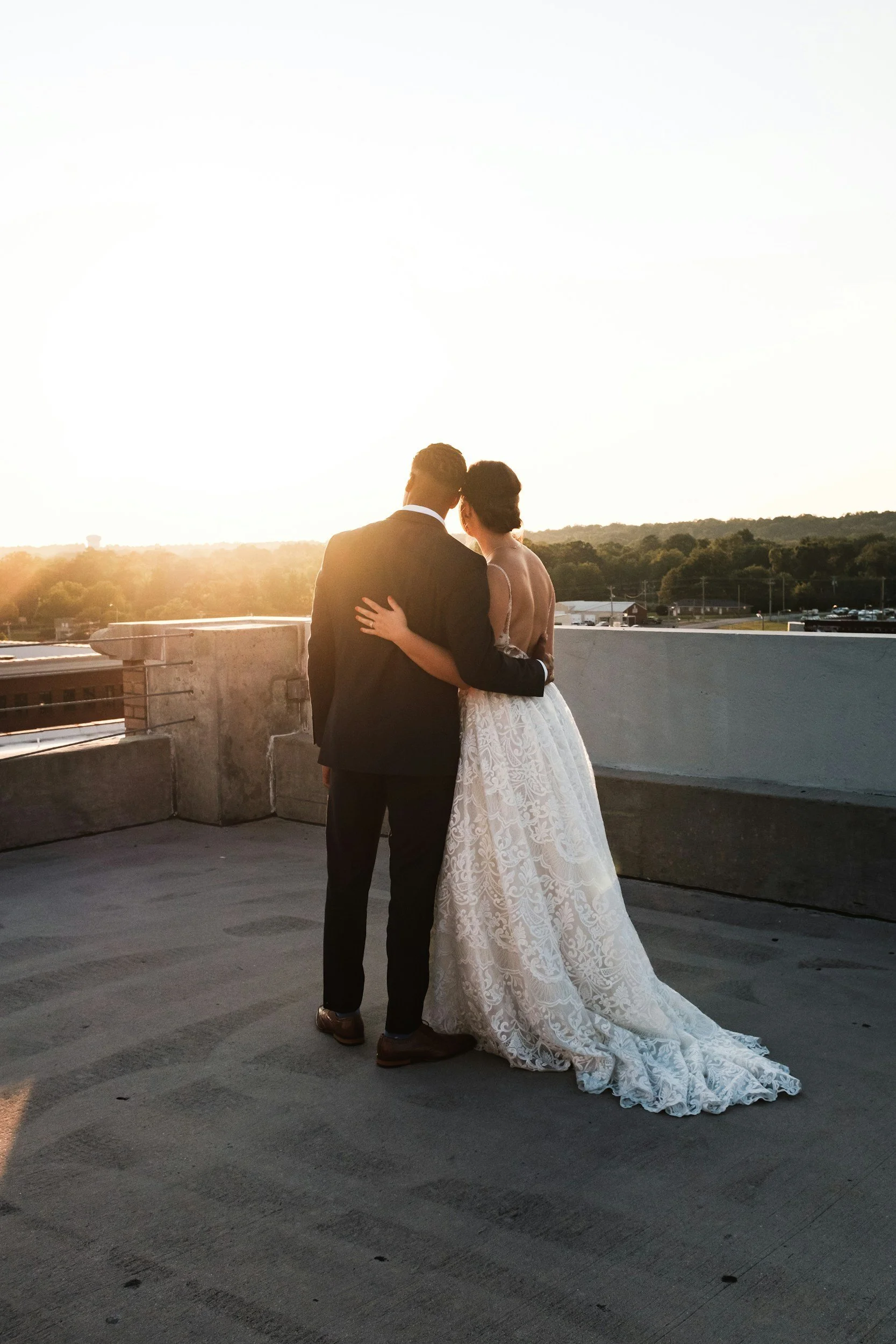
A marriage-based green card (also called a spousal visa or marriage green card) allows the foreign spouse of a U.S. citizen or lawful permanent resident (green card holder) to obtain permanent residence in the United States.
This process typically begins with filing Form I-130 (Petition for Alien Relative) to establish your qualifying marriage relationship, along with or followed by Form I-485 (Adjustment of Status) if your spouse is in the U.S., or consular processing if they're abroad. Once approved, your spouse receives a green card allowing them to live and work permanently in the United States, travel freely in and out of the country, and eventually apply for U.S. citizenship.
Immigration lawyer Lesley Irizarry-Hougan has devoted over 20 years exclusively to immigration law in Seattle, helping hundreds of married couples navigate the I-130/I-485 process successfully. Her entirely bilingual, Spanish-speaking staff ensures that language is never a barrier—whether you met online, married quickly, have a large age difference, or face other circumstances that require careful documentation, we communicate in the language you're most comfortable with throughout the entire process.
L.I.H. Law welcomes all couples, regardless of how you met, how long you've been together, or your background. We proudly serve LGBTQ+ couples who have the same rights to sponsor their spouses as any other couple since the Supreme Court's 2013 Windsor decision and subsequent USCIS guidance. We work with military families navigating expedited processes and unique deployment challenges. We help couples with complicated histories—second or third marriages, international relationships that started online, whirlwind courtships, large age differences, or previous immigration violations. USCIS scrutinizes marriage-based petitions heavily to prevent fraud, and we specialize in building rock-solid cases that prove your marriage is genuine, even in complicated circumstances.
Marriage Green Card Services We Provide
We guide Seattle-area couples through every aspect of the marriage-based green card process, including:
I-130 Petition for Alien Relative (Spousal Petitions)
Establishing your qualifying marriage relationship with USCIS
I-485 Adjustment of Status (For Spouses in the U.S.)
Allowing your spouse to obtain their green card without leaving the country
Concurrent Filing (I-130 + I-485 Together)
For U.S. citizens, filing both forms simultaneously to speed up the process significantly
Consular Processing (For Spouses Abroad)
Obtaining immigrant visas through U.S. embassies and consulates when your spouse is outside the U.S.
Conditional Green Cards (Marriages Under 2 Years)
Understanding the 2-year conditional residence process for recent marriages
Form I-751 (Removal of Conditions on Residence)
Removing the 2-year conditions and obtaining a permanent 10-year green card
I-751 Waivers for Divorce or Abuse
Filing individually if you've divorced or experienced domestic violence before the 2-year mark
Marriage Interview Preparation
Comprehensive coaching on what USCIS officers ask and how to prove your marriage is genuine
Marriage Fraud Defense
Building bulletproof cases to overcome USCIS scrutiny of recent marriages, online relationships, age gaps, or other red flags
LGBTQ+ Spousal Petitions
Same-sex marriages are fully recognized for immigration purposes—we help LGBTQ+ couples navigate the same process as opposite-sex couples
Military Spouse Green Cards
Expedited processing and special considerations for active-duty service members and veterans sponsoring spouses
Second and Third Marriages
Addressing USCIS concerns when either spouse has been married multiple times before
International Marriages (Met Online or Abroad)
Proving genuine relationships that began through international dating sites, social media, or while traveling
Quick Marriages and Short Courtships
Overcoming scrutiny when you married soon after meeting
Large Age Difference Relationships
Documenting authenticity when there's a significant age gap between spouses
Green Card Holders Sponsoring Spouses
Navigating the F2A category with its 2-3 year wait times before filing I-485
Affidavit of Support (Form I-864)
Proving financial ability to support your spouse at 125% of poverty guidelines
Joint Sponsors for Marriage Cases
Finding and preparing joint sponsors when the petitioner doesn't meet income requirements
Work Authorization (EAD) and Travel Permits (Advance Parole)
Allowing your spouse to work and travel while I-485 is pending
Marriage-Based Cases with Prior Immigration Violations
Addressing unlawful presence, visa overstays, or fraudulent entry in spousal petitions
Marriage-Based Cases with Stepchildren
Addressing minor stepchildren and options for immigrating for them
I-601/I-601A Provisional Unlawful Presence Waivers
Forgiving 3 or 10-year bars before spouses leave for consular interviews
Our Marriage Green Card Process
Initial Consultation - Comprehensive Marriage and Immigration Assessment
We conduct a detailed review of your situation, including: your status as U.S. citizen or green card holder, your spouse's current location and immigration status, how and when you met, your courtship timeline, your wedding details, how long you've been married, information on step-children (children of previous relationships), where you currently live together (or why you don't), any previous marriages either of you had, any immigration violations your spouse may have, and your financial ability to sponsor.
We're looking for potential red flags USCIS will scrutinize:
You met online through international dating sites and had limited in-person time before marriage
You married very quickly after meeting (less than a few months)
There's a significant age difference between you
This is a second, third, or fourth marriage for either spouse
You are married quickly after a divorce
Your spouse's immigration status was about to expire or they were facing deportation when you married
You don't currently live together full-time
Your spouse has previous immigration violations (overstays, unlawful presence, prior deportations, criminal history)
We identify these issues upfront and develop strategies to address them proactively. We provide honest assessments about your timeline, what evidence you'll need, and what to expect during the interview. If your spouse needs a waiver or has complications that require addressing first, we explain exactly what needs to happen and in what order.
Document Collection and Marriage Evidence Preparation
Marriage-based green cards require two types of documentation: legal documents proving eligibility, and relationship evidence proving your marriage is genuine.
Legal documents required:
Marriage certificate from the jurisdiction where you married
Proof of U.S. citizenship or permanent residence (your passport, birth certificate, naturalization certificate, or green card)
Divorce decrees from all previous marriages (both spouses)
Birth certificates for both spouses
Passport-style photos of both spouses
Medical examination (Form I-693) from USCIS-approved civil surgeon
Relationship evidence proving your marriage is real:
This is the most critical part of your application. USCIS wants to see that you have a genuine, ongoing marital relationship—not a marriage entered into solely for immigration benefits.
Strong evidence includes:
Proof you live together: Joint lease or mortgage in both names, utility bills addressed to both of you at the same address, mail from government agencies, insurance documents
Financial commingling: Joint bank accounts with regular activity by both parties, joint credit cards, one spouse named as beneficiary on the other's life insurance or retirement accounts, joint tax returns (if married and filed jointly)
Photos together: Throughout your relationship from when you first met to present day—wedding photos, honeymoon, holidays, family gatherings, everyday life. Organize chronologically with captions explaining when/where taken and who's in the photos
Communication history: Emails, texts, WhatsApp messages, phone records, video chat logs—especially important if you had a long-distance relationship before marriage or if one spouse travels frequently
Travel together: Flight itineraries, hotel reservations, vacation photos showing you traveled as a couple
Affidavits from people who know you: Letters from friends, family members, coworkers, neighbors, religious leaders, or others who can personally attest to your genuine relationship. These should be notarized and include the writer's relationship to you and how they know your marriage is real
For couples who face extra scrutiny: If your relationship has red flags (quick marriage, met online, large age gap, etc.), you'll need even more documentation. We help you build the strongest possible case by identifying gaps in your evidence and showing you exactly what additional documentation to gather.
Form I-130 Petition Preparation and Filing
Form I-130 (Petition for Alien Relative): You (the U.S. citizen or green card holder) file this form to establish your qualifying marriage relationship with your spouse. This requires detailed biographical information about both spouses, complete marital histories, current addresses and employment, information about children, and careful attention to dates and consistency.
Form I-485 (Adjustment of Status): If your spouse is in the United States in valid status, they can file Form I-485 to adjust status to permanent resident without leaving the country. This is a separate application with its own forms, medical exam, biometrics, and interview.
Concurrent filing for U.S. citizens: If you're a U.S. citizen and your spouse is in the U.S., you can file Forms I-130 and I-485 together at the same time. This significantly speeds up the process.
Green card holders cannot file concurrently: If you're a lawful permanent resident (not a U.S. citizen), you must file I-130 first and wait, depending on your category, approximately 2-3 years for a visa number to become available in the F2A category before your spouse can file I-485. This is a major reason many green card holders choose to pursue citizenship—to eliminate this waiting period for their spouses.
Work authorization and travel documents: While I-485 is pending, we can also file Form I-765 (work authorization) and Form I-131 (advance parole travel document), allowing your spouse to work and travel while waiting for their green card.
We prepare all forms meticulously, write detailed cover letters for complex cases, and ensure everything is filed correctly the first time to avoid delays or requests for additional evidence.
USCIS Processing - Biometrics and Background Checks
Timing (estimated): Receipt notice within 2-4 weeks, biometrics appointment 4-8 weeks after filing
After filing, you'll receive receipt notices from USCIS confirming they've accepted your application. Within 4-8 weeks, your spouse will be scheduled for a biometrics appointment at a local USCIS Application Support Center to have fingerprints, photos, and signature collected for background checks.
USCIS conducts FBI background checks, reviews immigration history, and verifies information in the application. During this time, USCIS may issue Requests for Evidence (RFE) asking for additional documentation or clarification—we respond to these strategically and thoroughly.
Work authorization and travel documents: While waiting for the green card interview, USCIS typically approves work authorization (EAD) and advance parole travel documents within 3-6 months of filing, allowing your spouse to work legally and travel abroad while the case is pending.
Marriage Green Card Interview - The Most Critical Step
Timing: Scheduled 8-18 months after filing I-485 for most Seattle couples
The marriage interview is the make-or-break moment of your application. USCIS schedules an in-person interview at your local field office (Seattle Field Office at 12500 Tukwila International Blvd for King County residents) where a USCIS officer will verify that your marriage is genuine and not entered into solely for immigration purposes.
What happens at the interview:
Both spouses should attend. You'll both be sworn in and questioned.
The officer reviews your application and asks questions about how you met, your courtship, your wedding, and your daily life together.
You'll answer questions about your relationship—sometimes separately to see if your answers match. These can be very detailed and personal.
The officer may request additional documents if they have concerns.
At the end, the officer may approve on the spot (you'll receive your green card in the mail within 2-3 weeks), or they may need to review further and mail a decision later.
Typical interview questions:
How did you meet? When and where?
Who asked who out on the first date? Where did you go?
When did you decide to get married? Who proposed and how?
Describe your wedding ceremony. Who attended?
Where do you live? Describe your home.
What side of the bed does your spouse sleep on?
What time does your spouse wake up for work?
What did you have for dinner last night?
What are your spouse's hobbies?
When was the last time you communicated with your spouse's family?
These questions test whether you actually know each other intimately as married couples do. If your answers don't match or you can't answer basic questions about your daily life together, USCIS may suspect fraud.
For cases with red flags: If USCIS has concerns about your marriage (quick marriage, met online, large age gap, etc.), expect more detailed questioning and potentially a second interview called a "Stokes interview" where you're interviewed separately and officers compare your answers line-by-line.
Our interview preparation is thorough: We conduct full mock interviews with both spouses, review your entire application line by line, prepare you for difficult questions, explain how to answer honestly, discuss what documents to bring, and develop strategies for addressing any weaknesses in your case.
Green Card Approval - Conditional vs. Permanent
If approved, your spouse will receive their green card in the mail within 2-3 weeks. The type of green card depends on how long you've been married:
Conditional 2-Year Green Card (Marriages Under 2 Years):
If you've been married less than 2 years at the time of green card approval, your spouse receives a conditional green card valid for 2 years only. This is USCIS's way of combating marriage fraud—they want to see that your marriage lasts beyond just getting the green card.
Before the 2-year anniversary (specifically, during the 90-day window before it expires), you and your spouse must file Form I-751 (Petition to Remove Conditions on Residence) jointly to remove the conditions and obtain a permanent 10-year green card. I-751 requires proving your marriage is still ongoing and genuine with updated evidence (joint accounts, bills, lease, photos from the past 2 years, etc.). If you are separated or divorced, you will need to provide proof that the marriage was genuine during the time you were together after the approval of the green card.
If you fail to file I-751 during the 90-day window, your spouse's green card automatically expires, and they risk being put in front of an immigration judge. This is serious—we help clients set up reminders and begin preparing I-751 documentation well in advance.
Permanent 10-Year Green Card (Marriages Over 2 Years):
If you've been married 2 years or longer at the time of green card approval, your spouse receives a permanent 10-year green card with no conditions. This is the same green card everyone else has. Your spouse can renew it every 10 years indefinitely, or they can apply for U.S. citizenship after 3 years of marriage to a U.S. citizen (or 5 years if you're a green card holder).
Form I-751 - Removing Conditions (If Applicable)
Timing: File during 90-day window before 2-year anniversary of receiving conditional green card
If your spouse received a conditional green card, you must file Form I-751 jointly before the 2-year anniversary to remove the conditions. This requires:
Filing I-751 together as a married couple (joint petition)
Updated evidence proving your marriage is still real (joint accounts, bills, lease, tax returns, photos from the past 2 years)
Affidavits from people attesting to your ongoing marriage
Potentially attending another interview if USCIS has questions
I-751 waivers if you're no longer together:
If you've divorced or separated before the 2-year mark, your spouse can still file I-751 alone with a waiver. Waivers are available if:
The marriage ended in divorce, but was entered into in good faith
You experienced domestic violence or extreme cruelty during the marriage
Removing conditions would cause extreme hardship to your spouse
We handle I-751 petitions regularly for joint petitions, separated couples, and divorcees, including complex waiver situations. Many couples don't realize they need legal help until the 2-year mark approaches—we recommend starting the process 6 months before your 90-day window to ensure everything is prepared properly.
Path to Citizenship and Long-Term Immigration Planning
Once your spouse has their permanent green card (either initially or after removing conditions), they can eventually apply for U.S. citizenship through naturalization:
If married to a U.S. citizen: Your spouse can apply for citizenship after 3 years as a permanent resident, as long as you're still married and living together.
If married to a green card holder: Your spouse must wait 5 years as a permanent resident to apply for citizenship (the same as everyone else).
We help with citizenship applications, bringing your family's immigration journey full circle from marriage petition to U.S. citizenship. We can also help with:
Sponsoring your spouse's children to join them in the U.S. (Stepchildren)
Sponsoring other family members once your spouse naturalizes
Maintaining permanent residence if you need to travel or live abroad temporarily
Understanding how divorce affects immigration status

Why Choose L.I.H. Law for Your Marriage Green Card Case
Our Specialty
Experience With Complex Immigration Journeys: Family-Based, Family Reunification, VAWA, Waivers
20+ Years Exclusively Practicing Immigration Law
-
Attorney Lesley Irizarry-Hougan has devoted her entire legal career to immigration law since graduating from Northern Illinois University School of Law.
-
Unlike general practice attorneys who handle immigration cases occasionally, Lesley exclusively focuses on immigration law. This means she understands the nuances of U.S. immigration law, stays current on policy changes, and knows how Seattle's USCIS office operates.
Fully Bilingual Service—Se Habla Español
-
Our entire staff is fluent in Spanish, not just the receptionist. From your first call to your oath ceremony, you can communicate in the language you're most comfortable with.
-
We translate documents, explain legal concepts in Spanish, and ensure you fully understand every step. This cultural and linguistic competence means we can better serve Seattle's large Latino immigrant community, though we welcome clients from all backgrounds.
Daughter of a Veteran with Deep Community Roots
-
As the daughter of a U.S. military veteran, Attorney Lesley Irizarry-Hougan has a profound respect for the meaning of American citizenship and the sacrifices families make to achieve it.
-
She understands both the immigrant experience and American values, bringing a unique perspective to every case.
Active Community Involvement
-
L.I.H. Law doesn't just practice immigration law—we actively serve Seattle's immigrant community. Attorney Lesley volunteers at
-
citizenship clinics sponsored by the Seattle Office of Immigrant and Refugee Affairs, helps immigrants apply for citizenship at Naturalization Day events, provides pro-bono services through Northwest Immigrant Rights Project (NWIRP), and gives free immigration workshops throughout Washington State.
Transparent, Reasonable Fees
-
We provide clear, upfront pricing with no hidden costs. Our fees are structured fairly, and we offer payment plans when needed.
Local Knowledge
-
Deep Understanding of Seattle USCIS Field Office Procedures
Transparent Process
-
Clear Process with Timeline Expectations
Client Service
-
Personal Attention Throughout - You're Not Just a File Number
Proven Results
-
100+ Five-Star Google Reviews from Satisfied Clients
Frequently Asked Questions
-
Processing times vary significantly based on whether you're married to a U.S. citizen or green card holder, and whether your spouse is in the U.S. or abroad:
For U.S. citizens sponsoring spouses in the United States (concurrent I-130/I-485 filing):
Total time (estimated): 10-24 months from filing to green card in hand
This is the fastest path because you file both forms together
Your spouse receives work authorization (EAD) and travel document (advance parole) within 3-6 months (estimated) while waiting for the interview
For U.S. citizens sponsoring spouses abroad (consular processing):
Total time: 12-24 months
6-14 months for I-130 approval
2-6 months for NVC processing and interview scheduling
Your spouse can enter the U.S. as a permanent resident within 6 months of visa issuance
For green card holders sponsoring spouses:
Total time (estimated): 2-4 years (much longer because of visa backlogs)
6-14 months for I-130 approval
Then 2-3 additional years waiting for a visa number to become available in the F2A category
Then 8-18 months for I-485 processing once a visa number is available
Important: These are estimates based on current USCIS processing times. Your actual timeline may be shorter or longer depending on your local field office workload, case complexity, and whether USCIS issues any Requests for Evidence.
How to speed things up: If you're a green card holder, the fastest way to bring your spouse to the U.S. is to naturalize and become a U.S. citizen first. This eliminates the 2-3 year wait for F2A visa numbers and allows your spouse to apply for adjustment of status immediately.
-
Conditional green cards are issued to spouses who have been married less than 2 years at the time their green card is approved. This is USCIS's primary tool for combating marriage fraud—by making the green card conditional for 2 years, USCIS can verify that your marriage lasts beyond just getting immigration benefits.
Key facts about conditional green cards:
The card is valid for exactly 2 years from the date it's issued
It says "Conditional Resident" on the card itself
You have all the same rights as a regular green card holder during those 2 years (can work, travel, etc.)
If you don't remove the conditions before it expires, you risk losing permanent resident status and can be put in removal proceedings
You can renew even if expired, and we can help you through this complex process
Removing conditions with Form I-751:
If you are filing jointly (you are still married to your spouse), you must file Form I-751 (Petition to Remove Conditions on Residence) during the 90-day window before your 2-year anniversary. This means if your conditional green card expires on June 1, 2027, you can file I-751 anytime between March 3, 2027 and June 1, 2027. Do not miss this window—it's critical.
To remove conditions, you must prove your marriage is still genuine:
Updated joint financial documents (bank statements, tax returns, insurance policies from the past 2 years)
Updated proof you still live together (lease, mortgage, utility bills)
Photos together from throughout the 2 years
Affidavits from friends/family attesting to your ongoing marriage
Birth certificates of any children born during the conditional residence period
USCIS may schedule another interview (less common than the initial green card interview, but still possible). If approved, your spouse receives a permanent 10-year green card.
What if we're divorced or separated before the 2-year mark?
Your spouse can still file an I-751 alone with a waiver if:
The marriage was genuine when you married, but ended in divorce—you must prove the marriage was real, even though it didn't work out
You were battered or subjected to extreme cruelty during the marriage (domestic violence)
Removing conditions would cause extreme hardship to your spouse (high bar to meet)
I-751 waivers are complex and require substantial evidence. We handle these cases regularly and can advise on whether your situation qualifies and what evidence you'll need, even if your conditional green card has expired or is expiring soon.
-
USCIS scrutinizes all marriage-based green card cases for fraud, but some marriages face more suspicion than others. If your relationship has certain "red flags," you'll need stronger evidence and better preparation.
Red flags that trigger extra scrutiny:
You met online through international dating sites
You married very quickly after meeting in person (weeks or months)
There's a large age difference between you (10+ years)
This is a second, third, or fourth marriage for either spouse
You married right before your spouse's visa was expiring or they were facing deportation
You don't currently live together full-time
One spouse has limited English proficiency
One spouse financially supports the other entirely
None of these red flags mean your marriage is fake or that you'll be denied. Thousands of couples with these circumstances successfully obtain green cards every year. But you need to be prepared to prove your marriage is genuine with strong evidence.
How to prove your marriage is real:
USCIS wants to see that you have an authentic, ongoing marital relationship. The best evidence includes:
1. Proof you live together:
Joint lease or mortgage in both names
Utility bills addressed to both spouses at the same address
Mail from different sources showing you both receive mail at the same address
2. Financial commingling:
Joint bank accounts with regular deposits and withdrawals by both parties
Joint credit cards used by both spouses
Each spouse named as beneficiary on the other's life insurance, retirement accounts, or wills
Joint tax returns (if you filed jointly)
3. Photos throughout your relationship:
From when you first met to present day
Wedding photos and honeymoon
Holidays, vacations, family gatherings
Everyday life photos showing you living together as a couple
Photos with each other's families
4. Communication history (especially for couples who met online or had long-distance periods):
Emails, texts, WhatsApp messages showing your developing relationship
Phone records or video chat logs
Screenshots of social media interactions
5. Third-party affidavits:
Notarized letters from friends, family, coworkers, neighbors who know you as a couple
Letters should explain how they know you, how often they see you together, and why they believe your marriage is genuine
The interview is where you really prove it:
USCIS officers ask detailed, personal questions about your daily life together to see if you actually know each other intimately as married couples do. If you can't answer basic questions about your spouse's routine, what side of the bed they sleep on, what they had for breakfast, or when you last saw their family, officers may suspect fraud.
Our job is to prepare you thoroughly: We conduct mock interviews, review your entire application, identify potential weaknesses, and teach you how to answer questions confidently and consistently. With proper preparation, couples with complicated circumstances successfully prove their marriages are genuine every day.
-
Yes, as long as they have an approved I-765 (work permit). If your spouse is in the United States and files Form I-485 (Adjustment of Status), they can also file Form I-765 (Application for Employment Authorization) at the same time.
Work authorization (EAD) details:
Timing (estimated): USCIS typically approves EAD within 3-6 months of filing
Validity: Work authorization is valid for 1-5 years and can be renewed if the green card isn't yet approved
No restrictions: Your spouse can work for any employer in any position once they have EAD
Social Security Number: With EAD, your spouse can apply for a Social Security Number if they don't already have one
Travel while I-485 is pending:
We also file Form I-131 (Application for Advance Parole Travel Document) at the same time. This allows your spouse to travel outside the U.S. and return while I-485 is pending without abandoning their application. Without advance parole, leaving the U.S. automatically abandons your I-485 application.
Combo card: USCIS can issue a single "combo card" that serves as both work authorization (EAD) and advance parole travel document in one card.
Important: If your spouse is abroad, they cannot work in the U.S. until after they receive their immigrant visa and enter the United States as a permanent resident. Consular processing cases don't have EAD or advance parole—those are only available during adjustment of status in the U.S.
-
This is one of the most common and most complicated situations in marriage-based immigration. The answer depends heavily on whether you're a U.S. citizen or green card holder, and how your spouse entered the United States.
If you're a U.S. citizen (not a green card holder):
Scenario 1: Your spouse entered WITH inspection (came through a port of entry, even if they later overstayed):
Good news: They can likely adjust status in the U.S. despite the visa overstay
Immediate relatives of U.S. citizens are forgiven for most visa overstays
They can file I-485 and get their green card without leaving the country
Exception: If they overstayed more than 180 days and then left the U.S., they triggered a 3-year or 10-year bar and need a waiver
Scenario 2: Your spouse entered WITHOUT inspection (crossed the border illegally, no inspection by immigration officer):
Bad news: They generally CANNOT adjust status in the U.S., even as immediate relatives of U.S. citizens
They must leave the U.S. for consular processing to get their green card
But leaving triggers the 3 or 10-year unlawful presence bar if they were in the U.S. unlawfully for 180+ days
Solution: Apply for an I-601A Provisional Unlawful Presence Waiver BEFORE leaving the U.S. This waiver, if approved, forgives the 3 or 10-year bar and allows them to get their immigrant visa abroad and return to the U.S. quickly
Exception: If your spouse qualifies for INA §245(i) (someone filed an immigrant or labor certification petition for them on or before April 30, 2001), they can pay a $1,000 penalty and adjust status in the U.S. despite unlawful entry
If you're a green card holder (not a U.S. citizen):
Much stricter rules: Your spouse generally cannot adjust status in the U.S. if they entered illegally OR overstayed their visa by more than 180 days
They must leave for consular processing, which triggers unlawful presence bars
Waivers are harder to get—they require proving "extreme hardship" to a qualifying relative
Our recommendation: If your spouse has significant unlawful presence or unlawful entry, consider naturalizing and becoming a U.S. citizen first before sponsoring them. This gives you many more options and forgiveness provisions.
Previous deportations or removal orders:
If your spouse was previously deported or has a final order of removal, they likely have a permanent bar or a 10/20-year bar depending on circumstances. They'll need I-212 permission to reapply for admission and potentially other waivers. These are extremely complex cases—please consult with an immigration attorney before filing anything.
Critical warning: Do NOT file I-485 if your spouse is not eligible to adjust status. Filing when ineligible can trigger removal proceedings and make things worse. We carefully analyze your entire situation before advising whether it's safe to file.
At L.I.H. Law, we handle complex cases involving unlawful presence, unlawful entry, and previous violations regularly. We'll give you an honest assessment of your options, the risks involved, and the best strategy for your family.
Have more questions? View our FAQs page →
What Our Clients Say
★★★★★
"We are so grateful for the incredible support and guidance we received from Lesley Ann Irizarry-Hougan throughout our green card process. From the very beginning, she explained every step with clarity, answered all of our questions with patience, and always made us feel confident and prepared. The interview process can be stressful, but thanks to Lesley's professionalism and thorough preparation, everything went smoothly and successfully. What stood out the most was not only her deep knowledge of immigration law, but also the personal care and attention she gave us as clients. Because of her hard work and dedication, I am now holding my green card, and we couldn't be happier."
— Adelia, Avvo Review (September 2025) - Marriage Green Card Success
★★★★★
"Our process went very smoothly! Would definitely recommend Lesley and her team."
— Chere Bautista, Google Review
★★★★★
"Lesley is an excellent immigration lawyer. She is always on top of everything to detail regarding the case. She's very knowledgeable, professional, and very easy to work with. Her bilingual skills were extremely helpful, as my girlfriend primarily speaks Spanish, and it made the entire process so much smoother for both of us. Lesley made what could have been a stressful and overwhelming immigration process manageable and even enjoyable. If you're looking for someone who is not only knowledgeable and professional but also genuinely caring and easy to work with, I highly recommend Lesley."
— Brandon, Avvo Review - Marriage Immigration Case
★★★★★
"With this office you not only have a lawyer who cares about you but also defends you as if it were a member of your family. The seriousness of her advice has changed my life for the best!"
— Maria Soto, Google Review (translated from Spanish)
★★★★★
"Very good communication and good work team. Attorney Leslie and her team are always aware of the cases and the documentation that must be presented."
— Jose Alexander Torres, Google Review (translated from Spanish)
★★★★★
"It was a long road but it was worth the wait thanks to the lawyer for her hard work and commitment, a dream more achieved and finally having reached the end of the tunnel and seeing the light, what an honor to have been helped and supported by her, she is a great person."
— Oscar Rivas, Google Review (translated from Spanish)